
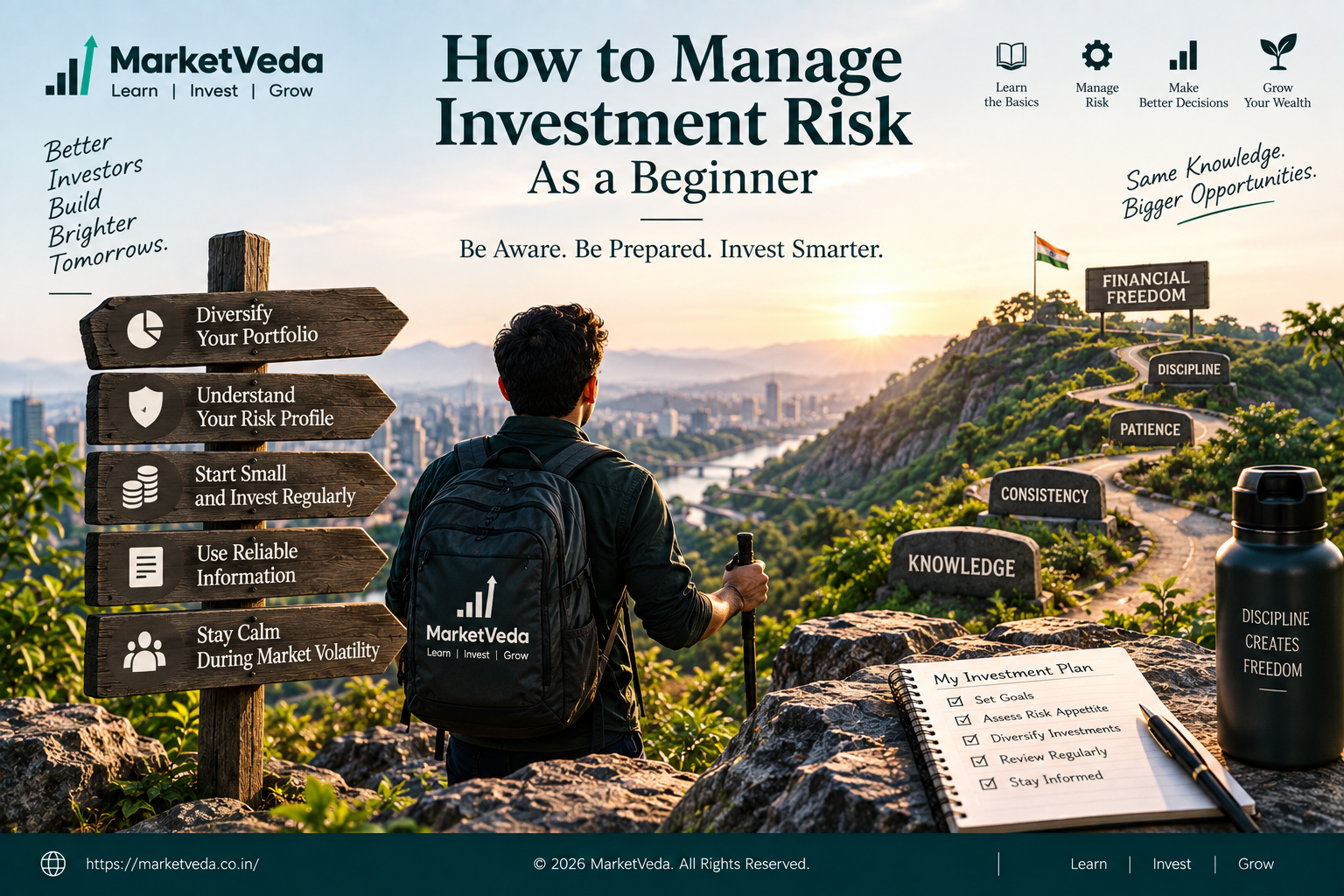
Investing can help you work toward long-term financial goals. However, every investment involves some level of risk.
For beginners, understanding how to manage investment risk is an important part of becoming a more informed investor.
Risk cannot be removed completely. However, investors can take practical steps to manage their exposure and make more disciplined decisions.
What Is Investment Risk?
Investment risk is the possibility that an investment may lose value or perform differently from what you expected.
Several factors can affect an investment.
These include:
- Market movements
- Company performance
- Economic conditions
- Interest rates
- Industry changes
- Global events
The type and level of risk can vary between different investments.
1. Understand Your Investment Goal
Start by identifying why you are investing.
Your goal could be:
- Long-term wealth creation
- Retirement planning
- A future purchase
- Building financial savings
Your goal can influence your investment time horizon and the level of risk you may be able to accept.
Therefore, understand your objective before selecting an investment.
2. Know Your Risk Tolerance
Risk tolerance refers to your ability and willingness to handle investment losses or market fluctuations.
For example, some investors may be comfortable with short-term price movements.
Others may prefer a more conservative approach.
Your financial situation, income, goals and investment horizon can all influence your risk tolerance.
3. Diversify Your Investments
Diversification is a common risk-management approach.
Instead of putting all your money into one investment, you can spread it across different securities, sectors or asset classes.
This can reduce concentration risk.
However, diversification does not guarantee returns or eliminate market risk.
4. Research Before Investing
Do not invest only because someone recommends a stock or financial product.
Take time to understand the investment.
You can study:
- Business model
- Financial performance
- Debt
- Valuation
- Industry conditions
- Potential risks
Good research can help you understand what you are investing in.
5. Consider Asset Allocation
Asset allocation means deciding how your money is distributed across different asset classes.
For example, an investor may have exposure to different types of assets based on their goals and risk profile.
The right allocation can differ from one investor to another.
Therefore, there is no single asset allocation that works for everyone.
6. Avoid Emotional Decisions
Markets can move quickly.
A sudden decline can create fear. A sharp rise can create excitement.
These emotions can sometimes lead to impulsive decisions.
Instead, investors should focus on their investment plan and financial goals.
Taking decisions based only on short-term market movements can increase unnecessary risk.
7. Review Your Investments
Managing investment risk is not a one-time activity.
Your financial goals and circumstances can change.
Market conditions can also change.
Therefore, review your investments from time to time.
Check whether your portfolio still matches your goals, time horizon and risk tolerance.
Common Mistakes Beginners Should Avoid
Chasing Quick Returns
High potential returns can also involve higher risks.
Following Unverified Tips
Do your own research before making an investment decision.
Putting Everything in One Stock
This can create high concentration risk.
Ignoring Costs
Investment-related charges can affect your overall returns.
Expecting Guaranteed Returns
No market-based investment can guarantee a particular return.